Discover the best haircuts for curly hair that enhance your natural texture. Learn techniques for avoiding bulk, creating volume, and achieving the perfect cut.
Have you ever left the salon with a seemingly perfect cut, only to wash it and discover a bottom-heavy triangle? Finding the right haircuts for curly hair often feels like a gamble. Traditional techniques treat your texture like a flat piece of paper, pulling wet strands straight down and ignoring their three-dimensional geometry.
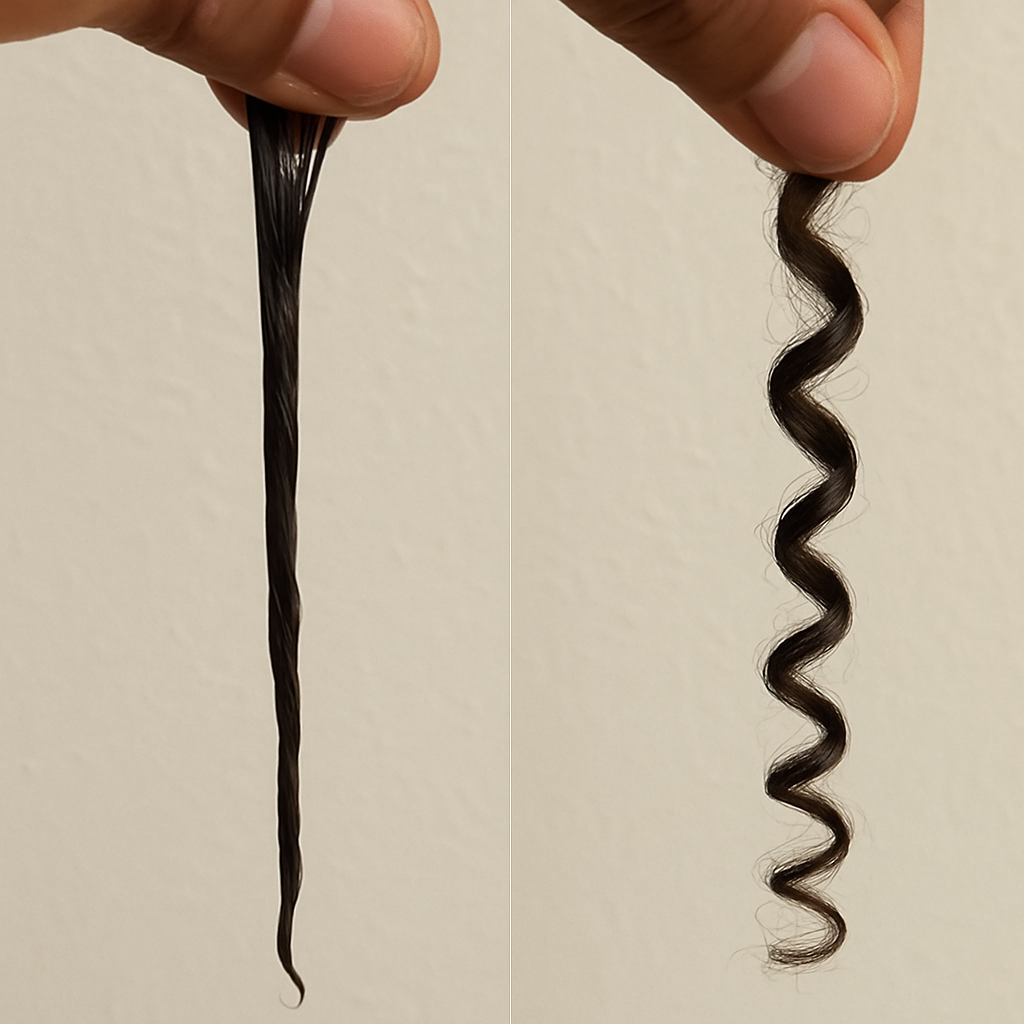
In salon practice, specialists rely on the "Spring Analogy" to explain this mismatch. Think of your hair as a coiled metal spring: water weight stretches it out, but it snaps back tightly once dry. According to texture experts, ignoring this bounce-back effect—which requires understanding curly hair shrinkage factor—is the exact reason a simple one-inch wet trim becomes a shocking three-inch dry chop.
To prevent that notorious "Christmas tree" silhouette, the secret lies in sculpting the hair without water. Cutting each unique curl pattern exactly where it naturally clumps together allows stylists to properly distribute weight from roots to ends. You no longer have to fear the salon chair when you know exactly why customized, dry shaping creates balanced, predictable bounce.
Heavy bottoms and flat roots create a classic "triangle" shape when stylists confuse texture with density. Texture is the thickness of a single strand—like fine silk or coarse thread. Density is simply how many hairs actually live on your head.
To build the right architectural shape, specialists use a curl pattern and density classification system. Patterns range from loose 3A loops to tight 4C zig-zags. Tighter springs have more "shrinkage" and bounce back aggressively when dry. Knowing your specific spring type helps reveal the best styles for high porosity coils, which need structural shapes that support their natural weight without flattening the crown.
Diagnosing your personal density is the first step toward managing bulk in thick textured hair. Try these three quick tests at home:
The Scalp Test: If you can easily see your scalp without parting your dry hair, you have low density.
The Ponytail Test: A ponytail thicker than two inches across means high density.
The Part Test: A wide, highly visible natural part indicates lower density.
Armed with this physical blueprint, you can request a silhouette that works. However, because those springs stretch out under heavy water, traditional salon techniques often ruin the geometry—which is exactly why seeing your curls in their natural state changes everything.
Many clients leave the salon loving their length, only to wash it and find their hair three inches shorter the next day. Most stylists are taught to cut hair soaking wet. However, water heavily weighs down and stretches out your spring-like structure, masking your true shrinkage. When the hair finally dries and snaps back, a straight, wet line suddenly turns into an unpredictable silhouette.
Instead of pulling strands flat like a piece of paper, a specialist uses the Sculpting Method. This dry cutting technique for natural curls treats your hair like a 3D structure. By observing your true geometry, the stylist performs clump-based cutting—snipping individual curl families exactly where they naturally gather and rest. This visual logic ensures the shape you see in the chair is exactly what you get at home.
Successfully preparing for a professional dry cut means arriving with your hair completely dry, detangled, and styled exactly how you normally wear it. Letting the stylist read your living texture beforehand eliminates disastrous morning-after surprises. A sculpted foundation opens the door to specialized salon methods like DevaCut or Ouidad carving and slicing.
Navigating salon menus often feels like deciphering a secret language. When evaluating certified curl specialists, you will encounter two major methods: DevaCut and Ouidad. Understanding these specific certifications helps you choose the right approach, whether you battle heavy bulk or limp strands.
The DevaCut treats your hair like a custom sculpture. Stylists snip individual ringlets dry, working curl-by-curl so each piece falls perfectly without stretching. This method focuses heavily on maintaining curl definition after a trim, making it incredibly effective for enhancing your natural bounce.
To determine what suits your specific density, compare the dry DevaCut vs Ouidad carving and slicing techniques. Ouidad stylists actually cut the hair wet, strategically removing weight from the inside out like pruning a dense bush. This internal texturizing creates necessary space, allowing thick hair to interlock smoothly rather than expanding outward into a heavy pyramid.
Here is a quick breakdown to guide your choice:
Cutting State: Deva is performed dry; Ouidad is performed wet.
Goal: Deva builds upward volume; Ouidad encourages fluid movement.
Best For: Deva favors tight coils; Ouidad suits dense waves.
Whichever specialized technique you select, your daily silhouette relies entirely on how the stylist distributes weight through strategic layering.
Bottom-heavy bulk happens when dense strands stack, pulling roots flat while ends flare into a geometric pyramid. The secret to preventing a triangle hair shape isn't just chopping length. Specialists utilize internal layering for better weight distribution, selectively clipping pieces inside the canopy to create invisible pockets of space. This allows curls to spring upward instead of expanding outward.
Visualizing your silhouette is critical. When evaluating long layers versus short layers for volume, remember shorter crown layers build a rounder top, while longer layers keep volume focused lower. However, tools matter immensely. Do thinning shears ruin curl patterns? Absolutely. Razors and thinning shears shred the cuticle, causing severe frizz. Instead, safe point cutting removes bulk by snipping seamlessly into the natural curl clump.
Protecting your texture demands clear communication. Ask these four questions to verify your stylist's approach:
Will you use a razor or thinning shears today?
How will you connect the top layers to the bottom?
Are we cutting my hair wet or dry?
Where exactly will the shortest layer fall?
A solid layered foundation easily supports modern, low-maintenance shapes.
Social media might convince you trendy styles require hours of work, but the right shape actually reduces maintenance. Building on internal layering, the modern shag is a brilliant wash-and-go solution. Unlike choppy 1970s versions, the modern shag for coiled textures uses soft layers to release crown weight. Because it embraces natural volume, this adaptable shape easily fits professional environments and is increasingly popular in haircuts for men with curly hair.
Customizing these silhouettes requires specific attention to the front of your hair. When requesting face-framing layers for wavy textures, the goal is carving pieces that curve naturally around your cheekbones. Think of it like tailoring a suit; your stylist sculpts shorter curls to highlight your unique bone structure. This breaks up heavy sections, ensuring your features are never swallowed by blocky bulk.
Whether you want an effortless shag or tailored framing, getting that perfect result relies entirely on articulating these desires clearly during your consultation.
Walk into your DevaCut or dry-cut consultation with clarity. Use HairPick beforehand to align on length, layers, and face-framing goals: ten AI-matched visuals plus plain-language briefs help you interview stylists with specifics, not vague "I want more volume."
Sitting in the salon chair often feels like a gamble, but speaking up changes everything. While finding a certified curl specialist is your best defense against bad cuts, your consultation script matters most. Tell them: "I want to remove internal bulk to enhance my shape, but please avoid thinning shears." This immediately shows you expect customized sculpting rather than a standard trim.
Protecting your texture also requires spotting a "curl imposter" early. Watch for these immediate red flags during your consultation:
Raking a fine-tooth comb through your dry texture.
Pulling out thinning shears or a razor to "tame" volume.
Insisting on a soaking wet cut, completely ignoring how your hair acts when it shrinks.
Skipping the essential styling steps required for maintaining curl definition after a trim.
You hold the ultimate power in that chair. If a stylist ignores these physical boundaries, politely decline and leave before the first snip. Establishing these boundaries sets the stage for a highly predictable and successful haircut.
You no longer have to cross your fingers and hope for the best when sitting in the salon chair. Armed with an understanding of shrinkage and weight distribution, you can confidently guide your appointment toward predictability. Before your next visit, build a personal hair profile detailing your typical styling time and how your hair behaves on day two. Sharing this exact blueprint transforms your stylist into a true partner in shaping your curls.
Ultimately, mastering haircuts for curly hair means executing a gentle post-cut routine to help your freshly sculpted shape settle. As you establish this foundation, your mornings will shift from damage control to simply refreshing your natural bounce. Exceptional curly haircuts prove your texture isn't difficult at all—it just needed the right geometry to let you stop managing your hair and start wearing it with confidence.